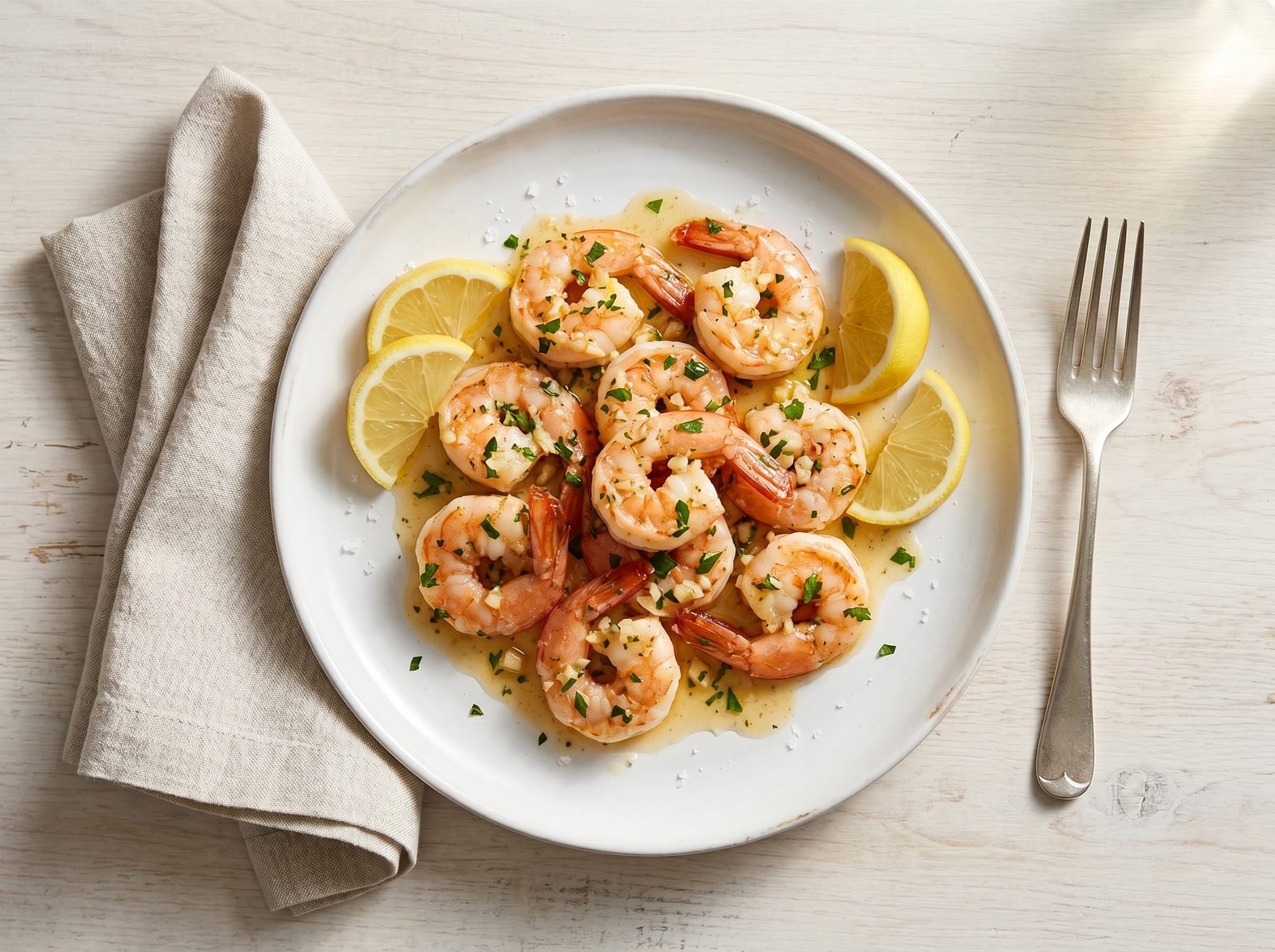
Here’s the thing nobody tells you about a garlic butter shrimp recipe: the difference between restaurant-perfect and sad, rubbery shrimp isn’t the butter, the garlic, or even the pan. It’s about 45 seconds of cook time. Shrimp go from translucent to overcooked faster than almost anything in your kitchen, and once they curl into tight little O’s, there’s no going back. I’m Mia Grace, and after burning through more pounds of shrimp than I’d like to admit, I finally cracked the timing, the garlic, and that silky lemon-butter sauce. This is the version I make on a Tuesday when I want something that tastes like a date night but is on the table in 15 minutes.
Why You’ll Love This Garlic Butter Shrimp
This is one of those recipes that punches way above its weight. Six pantry-friendly ingredients, one skillet, and dinner that genuinely feels special.
- Fast: Start to finish in about 15 minutes, most of which is just mincing garlic.
- Naturally low-carb and high-protein while still feeling indulgent.
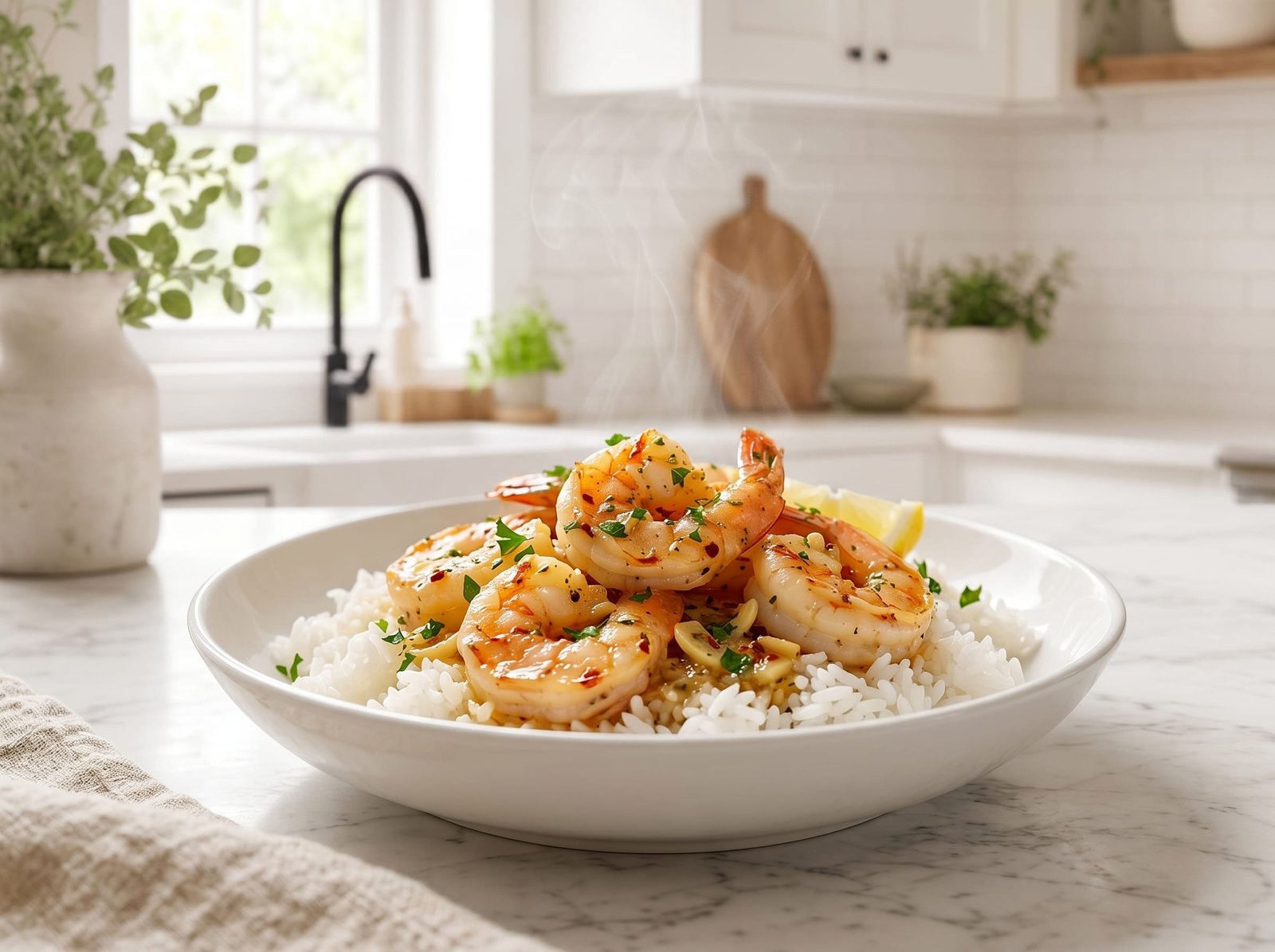
- Endlessly flexible—toss it with pasta, spoon it over rice, pile it onto toast, or fold it into tacos.
- Beginner-proof, as long as you respect the clock (more on that below).
The One Thing That Makes or Breaks Garlic Butter Shrimp
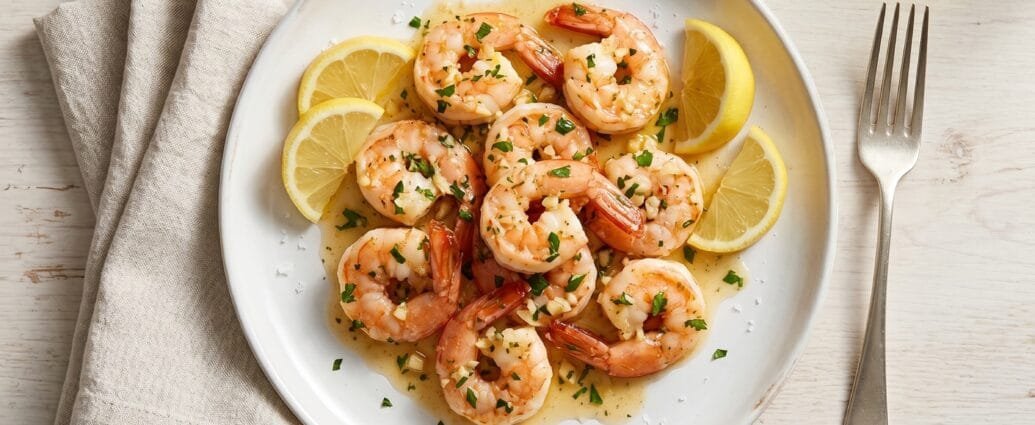
Let me save you the heartache I learned the hard way: shrimp are done the moment they turn opaque and form a loose C-shape—not a tight O. That’s the whole secret. An O means they’re overcooked and will be chewy. A gentle C means they’re juicy and tender. For most large shrimp, that’s about 90 seconds to 2 minutes per side over medium heat. Pull them when they look just barely done, because carryover heat in the buttery sauce finishes them perfectly. I genuinely set a timer the first few times until it became muscle memory. Dry shrimp also sear better than wet ones, so pat them properly—a watery shrimp steams instead of browning and never develops that golden edge.
Ingredients (With Notes)
- 1 lb large shrimp, peeled and deveined — Fresh is lovely, but frozen-then-thawed is honestly what I use most. Look for 16/20 or 21/25 count; smaller shrimp overcook in a blink.
- 4 tbsp unsalted butter, divided — Splitting it matters: some up front to cook in, the rest stirred in at the end so it stays glossy instead of greasy.
- 4 cloves garlic, minced — Fresh only here. Jarred garlic burns and turns bitter. This is the star, so don’t be shy.
- 1/2 tsp salt and 1/2 tsp black pepper
- 1/2 tsp red pepper flakes (optional) — A little warmth that plays beautifully against the butter.
- Juice of 1 lemon — Added off the heat to keep it bright, not cooked-flat.
- 1 tbsp fresh parsley, chopped
Step-by-Step (With Real Technique Cues)
- Dry the shrimp thoroughly. Lay them on paper towels and press the tops too. This is the step everyone skips and then wonders why their shrimp didn’t sear.
- Heat the pan first, then the butter. Get a large skillet over medium heat for a minute, then melt 2 tbsp butter. You want it foaming, not browning.
- Bloom the garlic for 30 seconds. Add the minced garlic and stir constantly just until fragrant. The second it smells amazing, the shrimp go in—don’t let it brown.
- Lay shrimp in a single layer. Don’t crowd the pan (work in two batches if needed). Season with salt, pepper, and red pepper flakes. Cook 90 seconds, until the bottoms turn pink.
- Flip once. Give them about another minute. Watch for that loose C-shape and opaque flesh, then kill the heat.
- Finish off the heat. Stir in the remaining 2 tbsp butter and the lemon juice, tossing so everything turns glossy. Shower with parsley and serve right away.
Common Mistakes to Avoid
- Overcooking. The number one shrimp tragedy. Pull them early; the residual heat finishes the job.
- Crowding the skillet. Too many shrimp drop the pan temperature and they steam into grayish rubber instead of searing.
- Burning the garlic. Bitter garlic ruins the whole sauce. Thirty seconds, constant stirring, then move on.
- Adding lemon too early. Acid cooked over high heat goes dull. Stir it in at the very end.
- Skipping the pat-down. Wet shrimp = no sear. Always dry first.
Make Ahead, Storage & Reheating
Shrimp are best eaten fresh, but life happens. You can mince the garlic and squeeze the lemon a day ahead and stash them in the fridge so dinner comes together in minutes. Store leftovers in an airtight container for up to 2 days. To reheat without turning them to rubber, go low and slow: a skillet over low heat with a fresh pat of butter, just until warmed through—about 60 seconds. I’d skip the microwave, which tends to overcook them. I don’t love freezing already-cooked shrimp; the texture suffers.
Variations
- Creamy garlic butter shrimp: Splash in 1/4 cup heavy cream at the end for a luxe sauce that’s incredible over pasta.
- Garlic butter shrimp scampi: Add a splash of white wine after the garlic and let it reduce for 30 seconds before the shrimp.
- Extra garlicky: Double the garlic and toast half of it golden for a deeper, nuttier flavor.
- Spicy Cajun: Swap the seasoning for a tablespoon of Cajun spice blend.
What to Serve With Garlic Butter Shrimp
That garlicky sauce deserves something to soak it up. A few of my favorites from the blog:
- Zesty Lemon Butter Asparagus with Toasted Almonds — bright and crisp, a perfect spring partner.
- Instant Pot Mashed Potatoes — creamy and ready to catch every drop of sauce.
- Warm Quinoa Salad with Roasted Vegetables — for a wholesome, full-meal bowl.
- Smashed Cucumber Salad — cool and tangy against the rich butter.
Kitchen Gear for This Recipe
- Instant-Read Meat Thermometer
- Enameled Cast Iron Dutch Oven
- Heavy-Duty Sheet Pan Set
- Glass Mixing Bowl Set
As an Amazon Associate, The Kitchen’s Aid earns from qualifying purchases at no extra cost to you.
FAQs
Can I use frozen shrimp?
Absolutely—I use them all the time. Thaw completely (a colander under cool running water takes about 10 minutes) and pat them very dry before cooking, or the extra moisture will steam them.
How do I know when shrimp are done?
They turn pink and opaque and curl into a loose C-shape. If they coil into a tight O, they’ve gone a touch too far. Pull them right at the C.
How do I store and reheat leftovers?
Keep them airtight in the fridge for up to 2 days. Reheat gently in a skillet over low heat with a little butter for about a minute—just until warm.
Can I make this dairy-free?
Yes. Swap the butter for olive oil or a good plant-based butter. You’ll lose a little richness but gain a lovely garlicky olive-oil shrimp.
What shrimp size is best?
Large (16/20 or 21/25 count) give you the most forgiving cook time and the best plump, juicy bite.
Quick Recipe Summary
Pat 1 lb large shrimp dry. Melt 2 tbsp butter in a hot skillet, bloom 4 cloves minced garlic for 30 seconds, then add shrimp with salt, pepper, and red pepper flakes. Cook about 90 seconds per side until opaque and C-shaped. Off the heat, stir in 2 more tbsp butter and the juice of 1 lemon, finish with parsley, and serve. Yield: 4 servings. Total time: ~15 minutes.
If you make this garlic butter shrimp, I’d love to hear how it turned out—drop a comment below or tag me @TheKitchensAid. Let’s keep weeknight dinners delicious together!