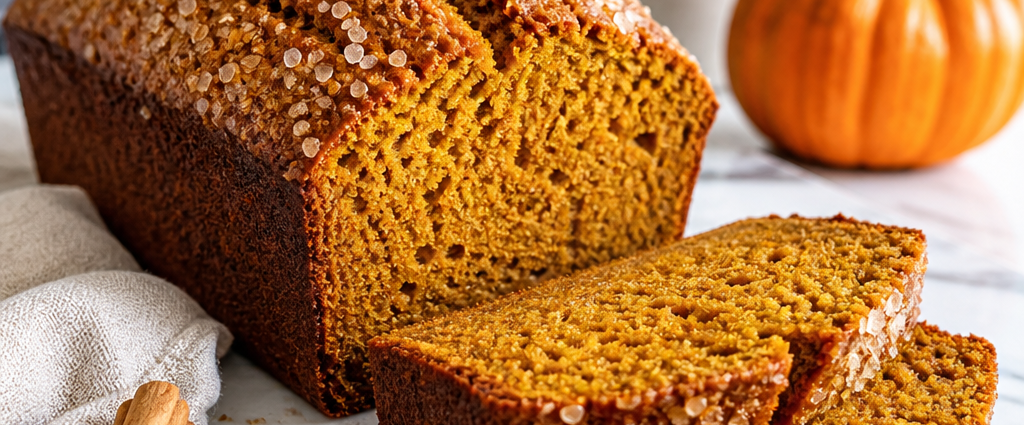
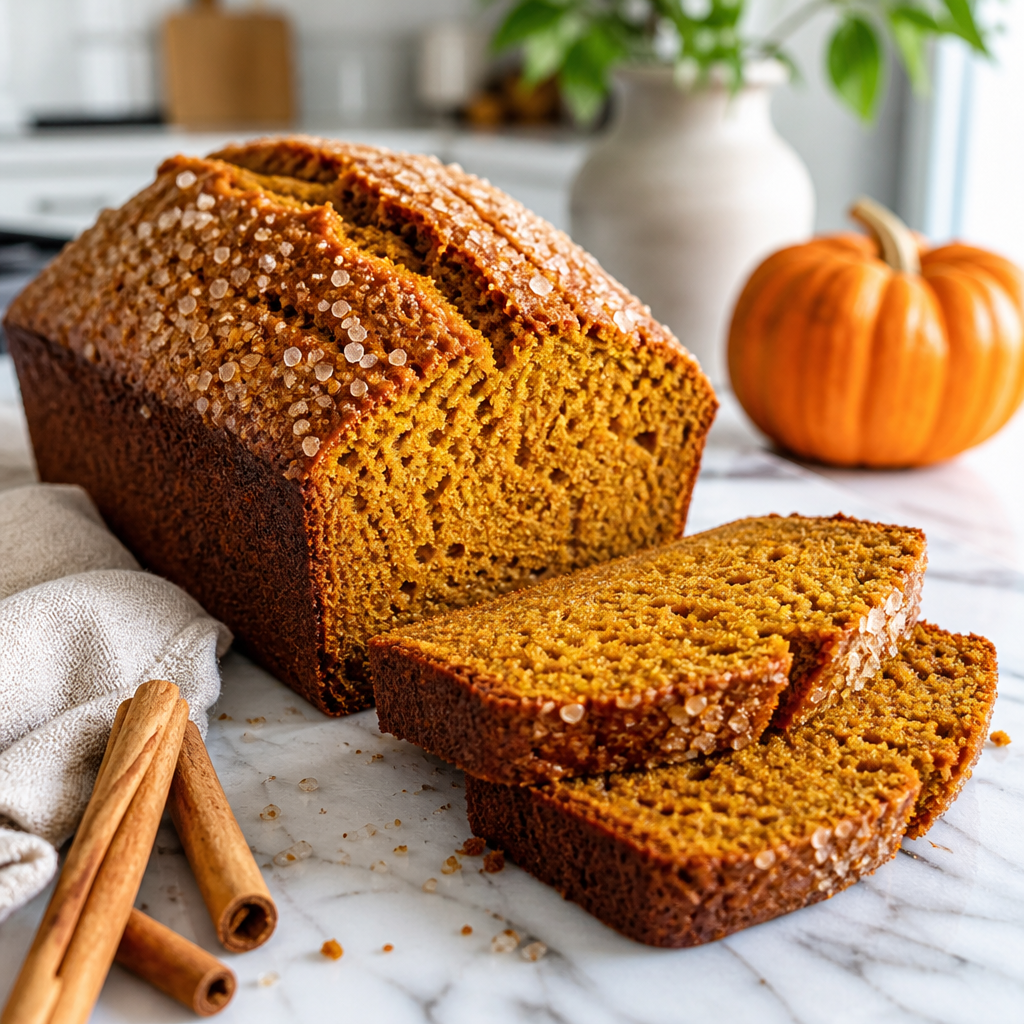
There is a moment every September when the air finally turns and the only thing that sounds right is a loaf of pumpkin bread cooling on the counter. This is the one I make on repeat: deeply spiced, properly moist, and mixed in a single bowl with a whisk, no mixer and no creaming butter required. It bakes up with a domed, crackly top and a tender orange crumb that stays soft for days.
I have made a lot of pumpkin loaves that were either dry by the second day or so sweet they tasted like cake pretending to be breakfast. This recipe fixes both. Oil instead of butter keeps the crumb genuinely moist rather than just moist on the first afternoon, a full cup of pumpkin puree carries the flavor, and a mix of granulated and brown sugar gives it caramel depth without tipping into dessert. It takes about fifteen minutes of actual work, and your kitchen will smell like the whole season while it bakes.
Why You’ll Love This Recipe
It is a one-bowl recipe in the honest sense. You whisk the wet ingredients together, add the dry ingredients straight into the same bowl, stir until they just disappear, and pour. There is no softening butter ahead of time, no stand mixer to wash, and no folding technique to get right. If you can stir, you can make this.
The texture is the part people comment on. Oil coats the flour proteins in a way butter does not, which is why oil-based quick breads stay tender long after a butter loaf has gone dry. Combine that with a generous cup of pumpkin puree, which is mostly water and fiber, and you get a crumb that is still soft on day three. The coarse sugar scattered over the top before baking adds a thin, crackly lid that contrasts beautifully with the softness underneath.
It is also endlessly adaptable without breaking. Fold in chocolate chips for the children, chopped toasted pecans for a bit of crunch, or a swirl of sweetened cream cheese down the middle if you want something that feels like a bakery purchase. The base recipe absorbs all of it happily, and it freezes so well that I usually bake two loaves and hide one.
Ingredients
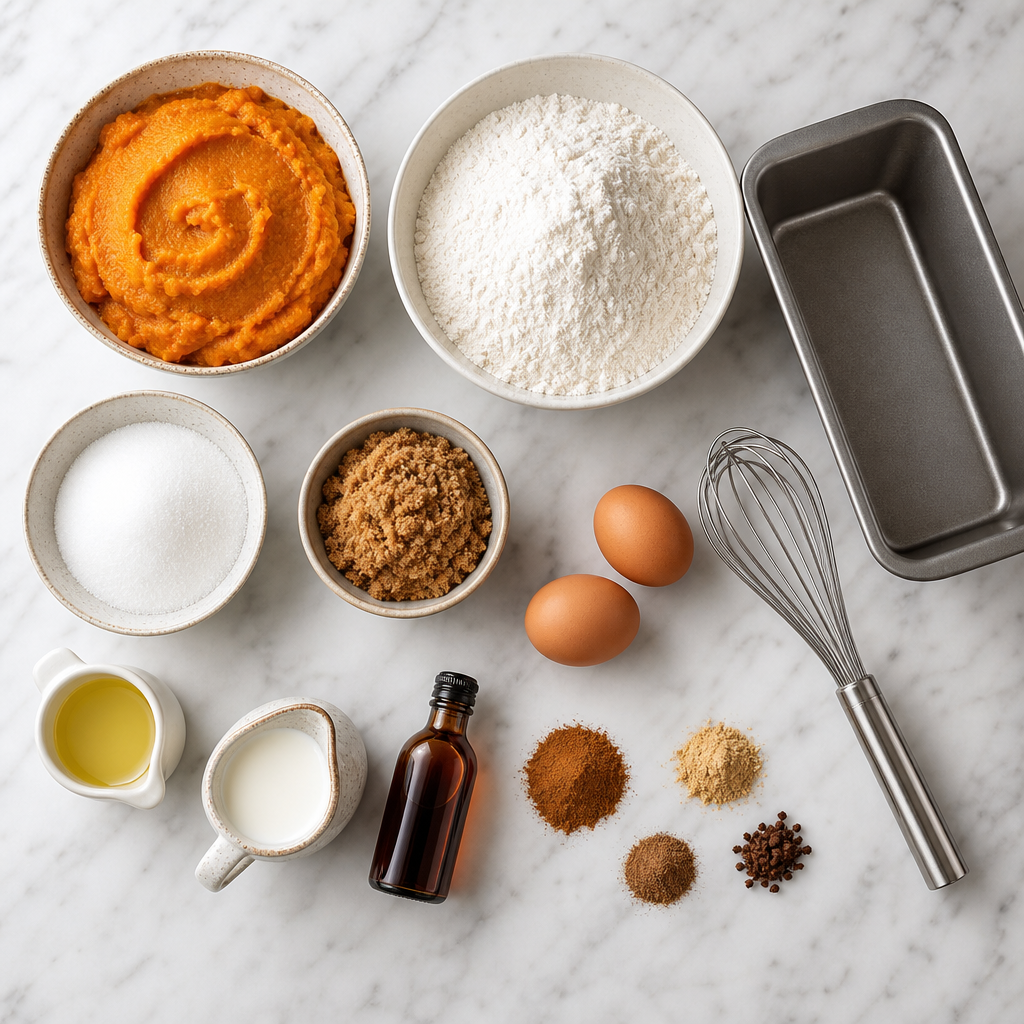
The foundation is 1 and three-quarter cups of all-purpose flour, spooned into the cup and leveled rather than scooped, since packing the flour is the single most common reason a quick bread turns out dry. To that you will add 1 teaspoon of baking soda, half a teaspoon of baking powder, and half a teaspoon of fine sea salt. The salt matters more than it looks; without it the spices go flat.
The spices are where the character lives: 1 and a half teaspoons of ground cinnamon, half a teaspoon of ground ginger, a quarter teaspoon of ground nutmeg, and a quarter teaspoon of ground cloves. That combination is essentially homemade pumpkin pie spice, and mixing it yourself means you can lean warmer or sharper to taste. If you already have a jar of pumpkin pie spice, two and a half teaspoons of it will stand in for all four.
For the wet side you need 1 cup of canned pumpkin puree, half a cup of granulated sugar, half a cup of packed light brown sugar, half a cup of neutral oil such as canola or vegetable, 2 large eggs at room temperature, a quarter cup of buttermilk or whole milk, and 2 teaspoons of vanilla extract. One warning worth repeating: buy pumpkin puree, not pumpkin pie filling. The two sit side by side on the shelf in nearly identical cans, but pie filling is already sweetened and spiced and will throw the whole loaf off. Finally, keep about 2 tablespoons of coarse or turbinado sugar aside for scattering over the top just before it goes into the oven.
Step-by-Step Instructions
Start by heating your oven to 350 degrees Fahrenheit, or 175 degrees Celsius, and preparing a 9×5-inch loaf pan. Grease it well and line it with a strip of parchment running the long way, leaving an overhang on both sides. That parchment sling is what lets you lift the finished loaf out cleanly instead of wrestling it upside down and losing the top.
In a large bowl, whisk the pumpkin puree, granulated sugar, brown sugar, and oil together until the mixture is smooth and glossy. Add the eggs one at a time, whisking after each, then whisk in the milk and vanilla. Take a moment here to break up any lumps of brown sugar against the side of the bowl, because they will not dissolve later.
Now add the dry ingredients directly on top. Sprinkle the flour, baking soda, baking powder, salt, cinnamon, ginger, nutmeg, and cloves over the wet mixture, then switch from a whisk to a spatula and stir just until the last streak of flour disappears. Stop there. Overmixing develops gluten and turns a tender loaf tough and tunneled, so a slightly lumpy batter is exactly what you want. If you are adding chocolate chips or nuts, fold them in with two or three more strokes.
Pour the batter into the prepared pan and smooth the top, then scatter the coarse sugar evenly across the surface. Bake for 55 to 65 minutes. Around the 40-minute mark, check the color, and if the top is already deeply browned, lay a piece of foil loosely over the pan for the remaining time so the crust does not darken further while the middle finishes.
The loaf is done when a skewer inserted into the center comes out with a few moist crumbs clinging to it but no wet batter. A completely clean skewer usually means you have gone a few minutes too far. Let the bread cool in the pan for 15 minutes so it can set, then use the parchment overhang to lift it onto a wire rack and cool completely before slicing. I know that is the hardest part, but cutting into it warm compresses the crumb and it will never look as good on the plate.
Tips for the Best Pumpkin Bread
Measure the flour properly. Dipping the measuring cup into the bag compacts the flour and can add a third more than the recipe intends, which is the difference between a moist loaf and a dense one. Spoon it into the cup and level the top with a knife, or weigh it if you have a scale. This one habit improves almost every baking recipe you will ever make.
Give the bread a full night if you can spare it. Quick breads are genuinely better on day two, once the starches have had time to settle and the spices have bloomed into the crumb. Wrap the cooled loaf tightly and leave it at room temperature, and the flavor will be rounder and the texture more even the next morning. It keeps well for about four days wrapped, or three months in the freezer if you slice it first and separate the slices with parchment so you can pull one at a time.
If you find yourself with half a can of pumpkin left over, and you will, put it to work rather than letting it die in the back of the fridge. A batch of pumpkin cream cheese muffins uses almost exactly what remains, and there are plenty more ideas in our roundup of the best pumpkin recipes for fall if you want to keep going.
Kitchen Gear for This Recipe
As an Amazon Associate, The Kitchen’s Aid earns from qualifying purchases at no extra cost to you.
Frequently Asked Questions
Can I use fresh pumpkin instead of canned?
Yes, but roast and puree it first, then drain it in a sieve or press it in a clean towel. Fresh puree holds much more water than canned, and skipping the draining step will give you a soggy, under-baked center.
Why did my pumpkin bread sink in the middle?
Almost always either underbaking or overmixing. Trust the skewer rather than the clock, and stir only until the flour disappears. Opening the oven door repeatedly in the first 40 minutes can do it too.
Can I make this into muffins?
Easily. Divide the batter among 12 lined muffin cups and bake at 350 degrees Fahrenheit for 18 to 22 minutes, checking at 18. Everything else in the recipe stays the same.
Can I reduce the sugar?
You can cut it by about a quarter, to roughly three-quarters of a cup total, without hurting the structure. Go much lower than that and you will lose both moisture and browning, because sugar does more here than sweeten.
Can I make it dairy-free?
Yes. The recipe already uses oil rather than butter, so you only need to swap the quarter cup of buttermilk or milk for an unsweetened plant milk. Almond and oat both work; add half a teaspoon of lemon juice if you want to mimic buttermilk’s tang.
If you bake this, I would love to know how it turned out and what you folded into it. For more wholesome inspiration to balance out all this cozy baking, browse these healthy eating ideas, then snap a picture of your loaf and tag @thekitchensaid on Instagram. Happy baking!
Moist Pumpkin Bread
American · Dessert
A deeply spiced, one-bowl pumpkin bread with a crackly sugar top and a moist orange crumb that stays soft for days. No mixer required.
Ingredients
- 1 3/4 cups all-purpose flour, spooned and leveled
- 1 tsp baking soda
- 1/2 tsp baking powder
- 1/2 tsp fine sea salt
- 1 1/2 tsp ground cinnamon
- 1/2 tsp ground ginger
- 1/4 tsp ground nutmeg
- 1/4 tsp ground cloves
- 1 cup canned pumpkin puree (not pumpkin pie filling)
- 1/2 cup granulated sugar
- 1/2 cup packed light brown sugar
- 1/2 cup neutral oil, such as canola or vegetable
- 2 large eggs, room temperature
- 1/4 cup buttermilk or whole milk
- 2 tsp vanilla extract
- 2 tbsp coarse or turbinado sugar, for the top
Instructions
- Heat the oven to 350F (175C). Grease a 9x5-inch loaf pan and line it with a parchment sling, leaving an overhang on both long sides.
- In a large bowl, whisk the pumpkin puree, granulated sugar, brown sugar and oil until smooth. Whisk in the eggs one at a time, then the milk and vanilla.
- Sprinkle the flour, baking soda, baking powder, salt, cinnamon, ginger, nutmeg and cloves over the wet mixture and stir with a spatula only until the last streak of flour disappears.
- Pour into the prepared pan, smooth the top and scatter the coarse sugar over it. Bake 55-65 minutes, tenting loosely with foil after about 40 minutes if the top browns too quickly.
- The loaf is done when a skewer comes out with a few moist crumbs. Cool in the pan 15 minutes, then lift out with the parchment and cool completely on a rack before slicing.
Nutrition: 250 calories
Made this? Rate it