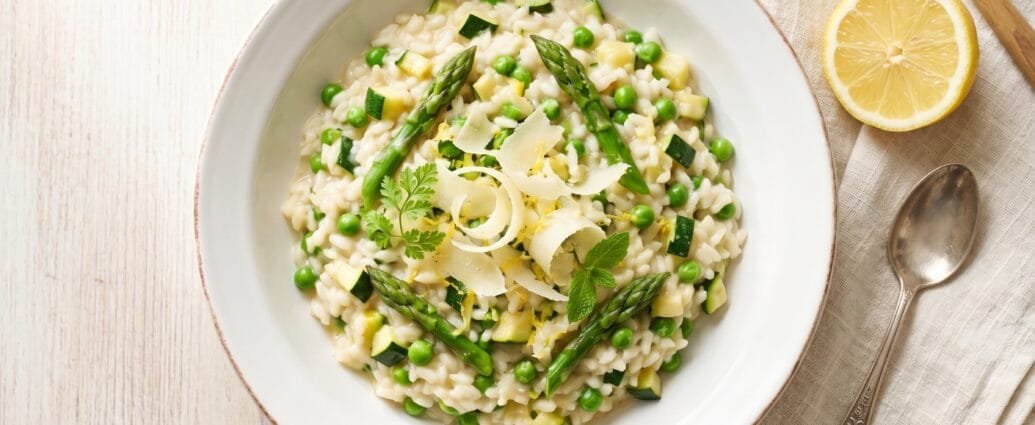
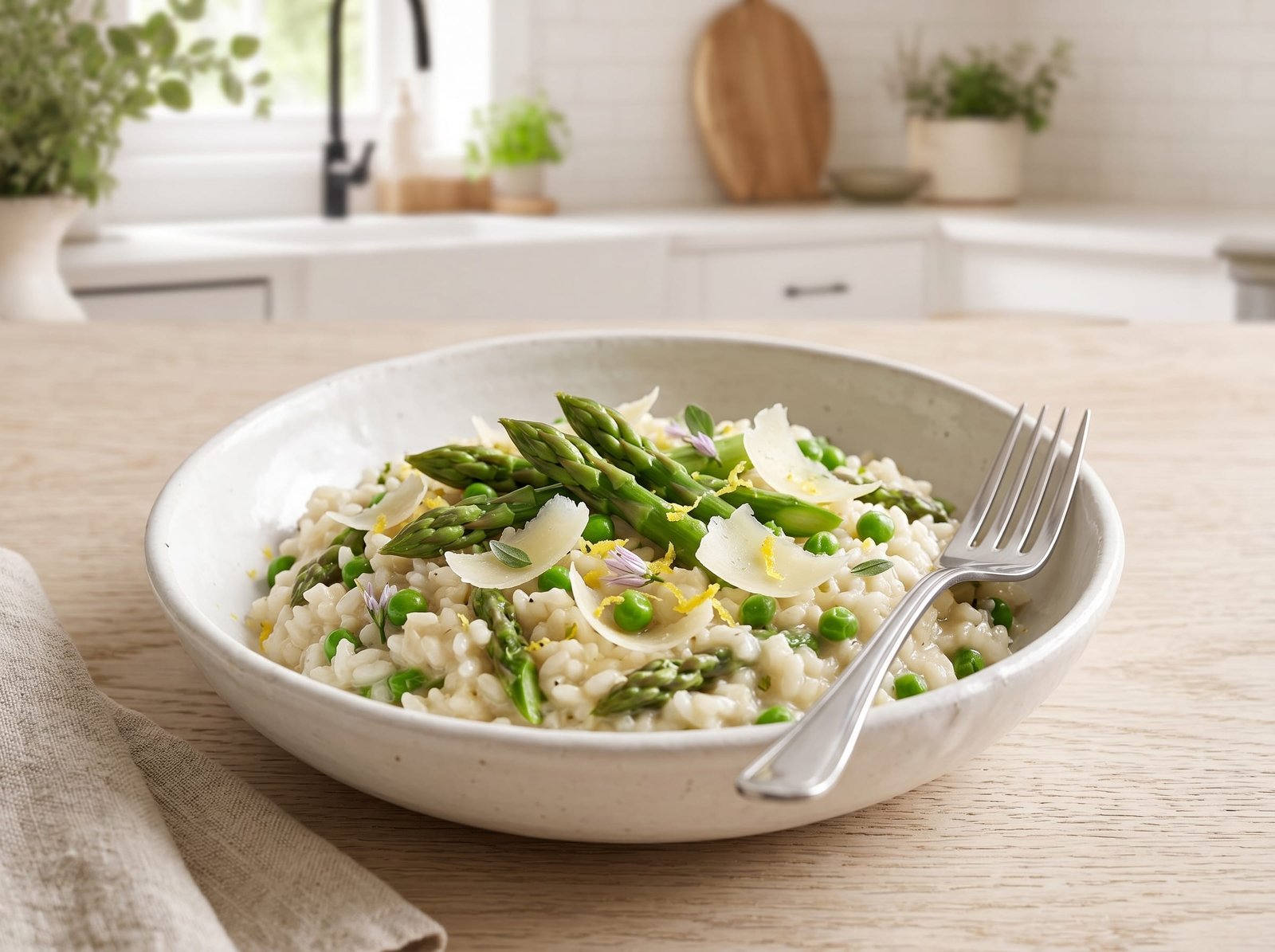
If your last attempt at risotto turned into a gluey, overcooked bowl of mush with sad, gray vegetables, this spring vegetable risotto is here to fix that. The two things that go wrong with almost every homemade vegetable risotto are the rice (too far one way is soup, too far the other is paste) and the veggies (added too early, they cook to drab limpness). I will show you the exact timing that keeps the rice creamy and just al dente while the asparagus, peas, and zucchini stay bright green and crisp-tender. Best of all, this risotto is creamy without a drop of cream, thanks to the starch in the rice and a proper stir.
Back in my personal-chef days, this was my favorite spring dinner-party dish because it looked elegant but came together with pantry staples and whatever was greenest at the market. Now it is a weeknight staple, equal parts comfort and celebration.
What Is Risotto and Why You’ll Love This One
Risotto is a northern Italian dish made by toasting short-grain rice and adding warm broth a little at a time, stirring to coax the starch out until the grains turn creamy. This spring version layers in seasonal vegetables and a bright hit of lemon. You will love it because it is:
- Creamy with zero cream, thanks to classic risotto technique.
- Made in one pan, so less mess and more flavor.
- Endlessly customizable with whatever spring veggies you have.
- Equally good as a main or an elegant side.
The Secret to Creamy Rice and Crisp-Tender Veggies
This is where generic recipes lose people. Two truths make or break risotto:
1. Keep your broth hot and add it gradually. Cold broth shocks the rice and stalls cooking, which leads to uneven, chalky grains. Keep it at a low simmer in a separate pot, and add it about half a cup at a time, waiting until each addition is almost absorbed before the next. That slow, steady absorption is what releases the starch and creates the signature creaminess, no cream required.
2. Add the vegetables only in the last 5 minutes. Asparagus, peas, and zucchini are tender and quick-cooking. Toss them in too early and they turn olive-drab and mushy. Stirred in for the final 5 minutes, they stay vivid and crisp-tender, holding their own against the rich rice. For an even brighter plate, blanch the asparagus separately for 60 seconds and stir it in at the very end.
Ingredients (with notes)
- Arborio rice (1 1/2 cups): the starchy short-grain that makes risotto creamy. Carnaroli or Vialone Nano work beautifully too. Do not rinse it, or you wash away the starch you need.
- Yellow onion (1 small, finely diced): the savory base; finely dice so it melts into the rice.
- Olive oil or unsalted butter (3 tablespoons): for sauteing; butter adds richness, olive oil keeps it lighter.
- Vegetable broth (4 to 5 cups, warmed): the flavor backbone. Keep it hot. Homemade is great, but warm store-bought works perfectly.
- Peas (1 cup, fresh or frozen): sweet pops of spring; frozen are fine, no need to thaw.
- Asparagus (1 cup, trimmed, 1-inch pieces): snap off the woody ends before cutting.
- Zucchini (1, diced): mild and tender; do not pre-salt or it weeps.
- Parmesan (1/2 cup grated, plus more to serve): stirred in at the end for savory depth.
- Lemon zest (of 1 lemon): the brightener that makes the whole bowl taste like spring.
- Salt and black pepper: season at the end, since broth and Parmesan are already salty.
- Optional white wine (1/2 cup): a splash after toasting the rice adds restaurant-level depth.
Step-by-Step Instructions
- Warm the broth. Heat the vegetable broth in a saucepan and keep it at a low simmer the entire time you cook. This single step is the most important for even, creamy rice.
- Saute the onion. In a large skillet or Dutch oven, heat the oil or butter over medium. Add the onion and cook until soft and translucent, about 5 minutes. Do not let it brown.
- Toast the rice. Add the Arborio and stir 1 to 2 minutes until the edges look translucent and the grains are coated in fat. Toasting builds a nutty backbone and helps the rice hold its bite.
- Deglaze (optional). Pour in the wine and stir until mostly absorbed.
- Add broth gradually. Ladle in about half a cup of hot broth, stirring often, and wait until it is almost absorbed before adding more. Continue for about 18 to 20 minutes until the rice is creamy and just tender with a slight bite at the center.
- Add the vegetables last. Stir in the peas, asparagus, and zucchini for the final 5 minutes so they stay bright and crisp-tender.
- Finish off heat. Remove from the heat and stir in the Parmesan and lemon zest. Season to taste with salt and pepper. For extra richness, swirl in a final pat of butter.
- Serve right away. Risotto waits for no one. Plate it loose and creamy with extra Parmesan and fresh herbs.
Common Mistakes to Avoid
- Using cold broth. It stops the cooking cold and gives you chalky, uneven rice. Keep it simmering.
- Dumping all the broth in at once. That makes boiled rice, not risotto. The gradual method is what releases the starch.
- Rinsing the rice. You need that surface starch for creaminess.
- Adding the veggies too early. Five minutes at the end keeps them green and crisp; ten minutes turns them to mush.
- Letting it sit. Risotto firms up fast. Serve it the moment it is creamy.
Make Ahead, Storage & Reheating
Risotto is genuinely best fresh, but you can get a head start. Prep all your veggies in advance, and you can par-cook the rice about two-thirds of the way, spread it on a sheet pan to stop the cooking, then finish later with hot broth and your final ingredients. Store leftovers in an airtight container in the fridge for up to 3 days. To reheat, warm gently on the stove with a splash of broth or water, stirring until loose and creamy again. I do not recommend freezing risotto, as the texture turns grainy. Instead, repurpose leftovers (see Variations).
Variations
- Protein boost: fold in grilled shrimp, rotisserie chicken, or sauteed mushrooms.
- Dairy-free: skip the Parmesan and stir in a tablespoon of nutritional yeast plus a dollop of vegan butter.
- Other spring veg: swap in leeks, green beans, or a handful of spinach at the end.
- Risotto cakes: shape chilled leftover risotto into patties and pan-fry until golden and crisp, a delicious second-day meal.
What to Serve With Spring Vegetable Risotto
This risotto is rich, so it loves a crisp green side or a light protein alongside. A few of my favorites from the blog:
- Lemon Butter Asparagus with Toasted Almonds echoes the lemony, green notes.
- Grilled Asparagus with Lemon Zest for a smoky, simple side.
- Maple Dijon Baked Cod makes it a complete, elegant dinner.
- Roasted Vegetable & Wild Mushroom Risotto if you want a cozier, earthier risotto next time.
- Grilled Halloumi and Veggie Wraps for an easy vegetarian companion.
Kitchen Gear for This Recipe
- Instant-Read Meat Thermometer
- Enameled Cast Iron Dutch Oven
- Heavy-Duty Sheet Pan Set
- Glass Mixing Bowl Set
As an Amazon Associate, The Kitchen’s Aid earns from qualifying purchases at no extra cost to you.
FAQs
What kind of rice should I use for risotto?
Arborio is the classic, easy-to-find choice because it is high in starch. Carnaroli and Vialone Nano are excellent too and hold their shape a touch better. Avoid long-grain or instant rice, which will not turn creamy.
Can I make risotto ahead of time?
Yes, partially. Par-cook the rice about two-thirds of the way, cool it quickly, then finish with hot broth and your vegetables just before serving. This is exactly how restaurants serve risotto fast.
Why is my risotto gummy instead of creamy?
Gummy risotto usually means it was over-stirred at high heat or cooked too long. Keep a gentle simmer, stir often but not constantly, and pull it off the heat while the grains still have a slight bite.
Do I have to use wine?
No. Wine adds depth, but the risotto is delicious without it. If you skip it, just go straight to adding broth after toasting the rice.
Can I freeze spring vegetable risotto?
I do not recommend it; the creamy texture breaks down and turns grainy after freezing. Refrigerate and reheat with a splash of broth, or make risotto cakes instead.
Recipe Summary
Creamy spring vegetable risotto with no cream. Toast Arborio rice with onion, add warm broth gradually while stirring for about 18 to 20 minutes, then fold in asparagus, peas, and zucchini for the last 5 minutes. Finish off the heat with Parmesan and lemon zest. Serves 4. Prep 10 minutes, cook 30 minutes, total 40 minutes, about 320 calories per serving.
Did you give this Spring Vegetable Risotto a try? I’d love to hear how it turned out. Leave a comment below, tag me on Instagram @thekitchensaid, or share it with a friend who loves a good springtime dinner!
Spring Vegetable Risotto
Italian · Main Course
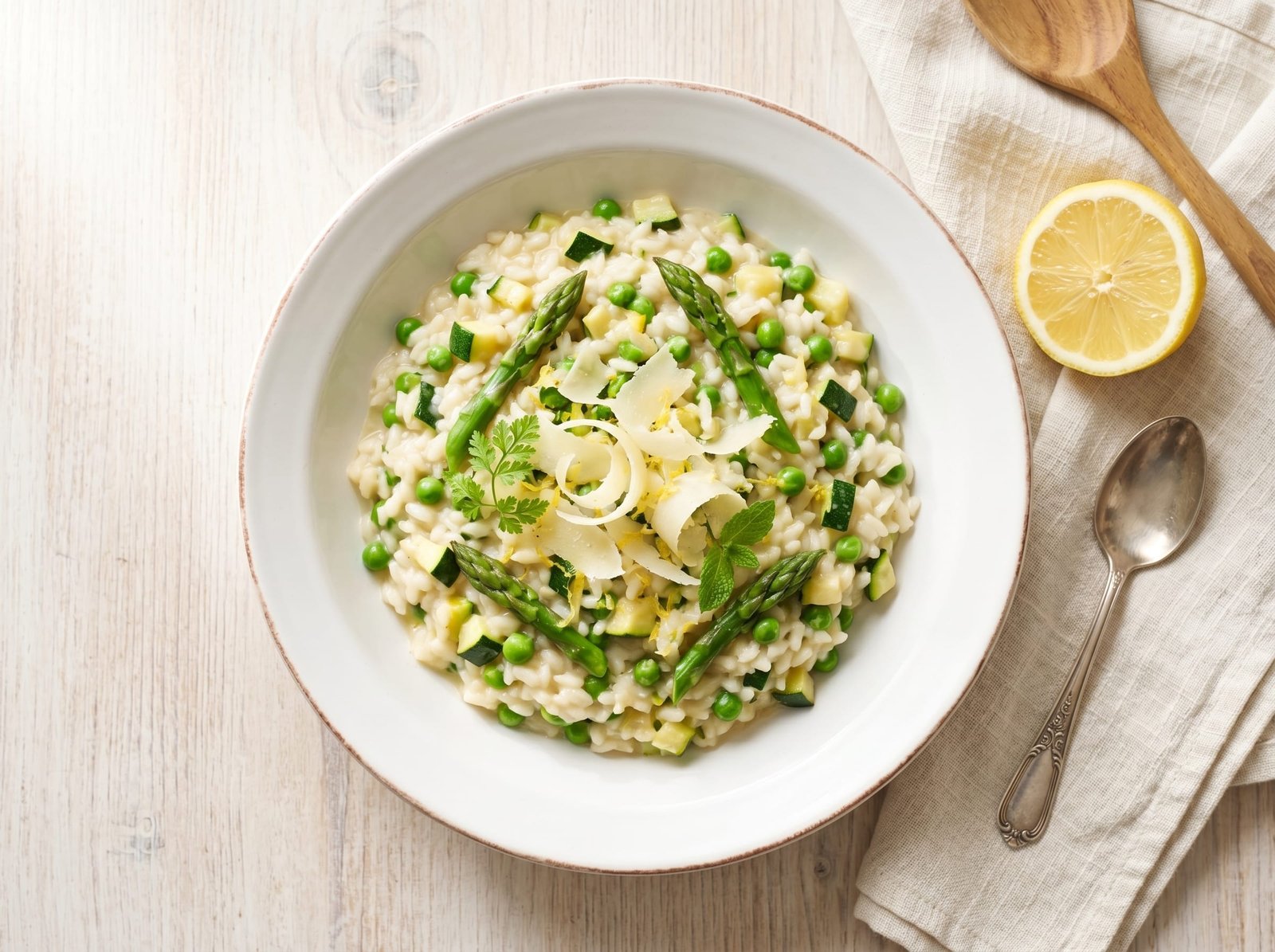
Creamy spring vegetable risotto made with no cream, packed with asparagus, peas, and zucchini and brightened with lemon and Parmesan.
Ingredients
- 1 1/2 cups Arborio rice
- 1 small yellow onion, finely diced
- 3 tablespoons olive oil or unsalted butter
- 4-5 cups vegetable broth, warmed
- 1 cup peas, fresh or frozen
- 1 cup chopped asparagus, trimmed and cut into 1-inch pieces
- 1 zucchini, diced
- 1/2 cup grated Parmesan cheese, plus more for serving
- Zest of 1 lemon
- Salt and black pepper to taste
- 1/2 cup white wine (optional)
Instructions
- Heat the vegetable broth and keep it at a low simmer throughout cooking.
- In a large skillet or Dutch oven, heat oil or butter over medium and cook the onion until soft and translucent, about 5 minutes.
- Add the Arborio rice and stir 1 to 2 minutes until coated and the edges look translucent.
- Optional: add the white wine and stir until mostly absorbed.
- Add hot broth about half a cup at a time, stirring often and waiting until nearly absorbed before adding more, about 18 to 20 minutes, until creamy and just tender.
- Stir in the peas, asparagus, and zucchini for the final 5 minutes to keep them crisp-tender and bright.
- Remove from heat and stir in the Parmesan and lemon zest. Season with salt and pepper and serve immediately with extra Parmesan.
Made this? Rate it