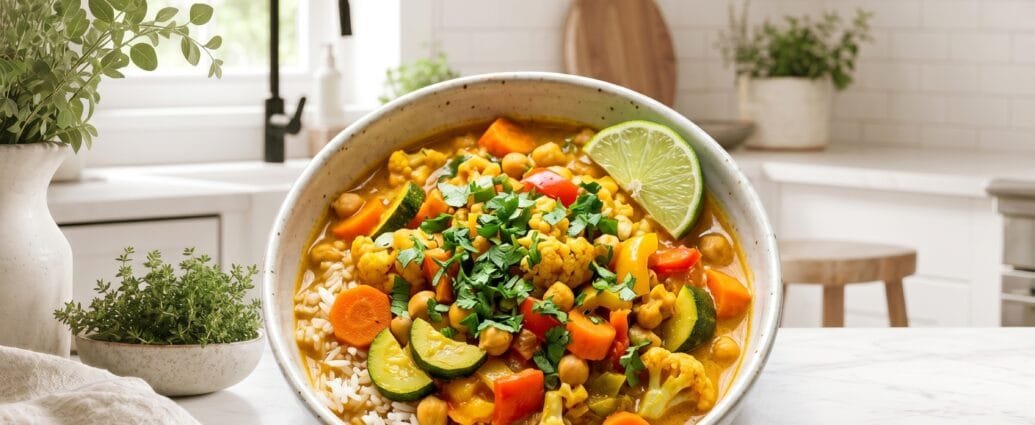
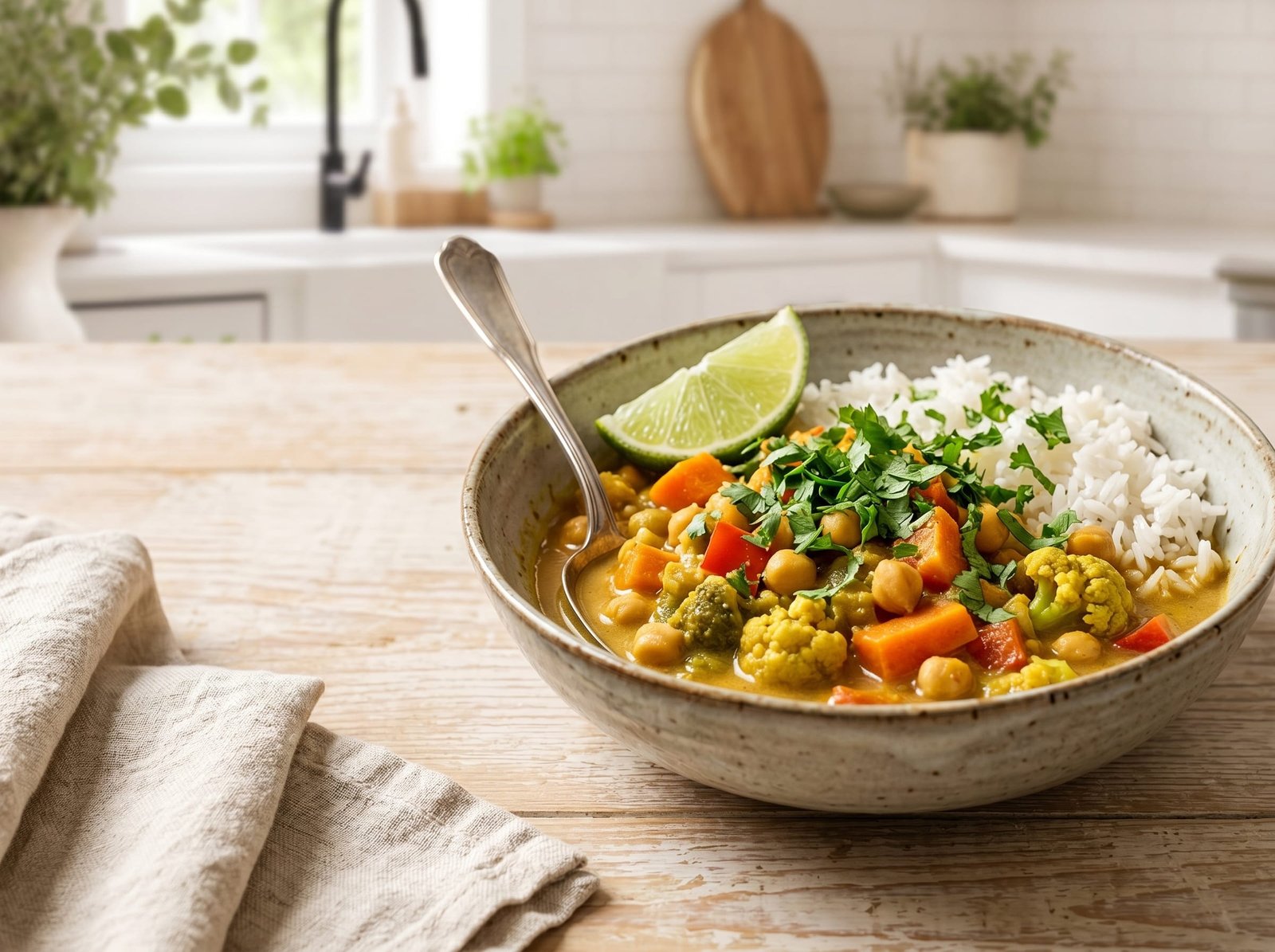
The dirty little secret of most one-pot Instant Pot vegetable curry recipes is that everything goes in at once, cooks for the same amount of time, and the delicate vegetables come out sad and mushy. Zucchini turns to slush, bell peppers go limp, and the bright, fresh dinner you pictured is suddenly baby food with curry powder. After making this curry on more chaotic weeknights than I can count, I cracked the fix, and it costs you zero extra time. You add the sturdy vegetables (carrots, cauliflower, chickpeas) to the pressure cook, and you stir the tender ones (zucchini, peppers, any greens) in after, letting the residual heat finish them. Five minutes of pressure plus a quick stir at the end gives you a curry where every vegetable still has shape and bite, swimming in a creamy, golden coconut sauce.
I’m Mia Grace, and this curry was born on one of those nights with half a fridge of veggies, a can of coconut milk, and no plan. It’s now a weekly regular, and my kids genuinely fight over the leftovers. It’s the “school pickup to spoonfuls of curry in 30 minutes” dinner I lean on hardest.
Why You’ll Love This Instant Pot Vegetable Curry
This is the kind of dinner that feels nourishing and a little special without asking much of you. One pot, almost entirely hands-off once it’s in the pot, and it bends to whatever vegetables you’ve got. It’s naturally vegan, gluten-free, and dairy-free, packed with fiber from the chickpeas and veggies, and the leftovers genuinely taste better the next day as the spices settle in.
- One pot, so cleanup is minimal.
- On the table in under 30 minutes start to finish.
- Vegan, gluten-free, dairy-free, and easy to adapt.
- Freezer-friendly and built for meal prep.
The Mushy-Vegetable Problem (and the Fix)
Vegetables cook at wildly different speeds, but the Instant Pot treats them all the same once that lid locks. Carrots, cauliflower, and potatoes can take the full pressure cycle and come out perfect. Zucchini, bell peppers, spinach, and peas? They’ll dissolve into mush in the same amount of time. The fix is simple layering by toughness: pressure cook the hardy vegetables, then stir the tender ones in after the lid comes off and let the hot curry gently cook them through in a few minutes. You get a curry with real texture and color instead of a uniform orange puree. This one move is the difference between a curry you’re proud of and one you choke down.
Ingredients (and Why Each One Matters)
- 2 tbsp olive oil – for sauteing the aromatics and blooming the spices.
- 1 yellow onion, diced; 3 garlic cloves, minced; 1 tbsp grated ginger – the flavor base; don’t skip building this first.
- 1 tbsp curry powder, 1 tsp cumin, 1 tsp turmeric – toasting these in the oil for 30 seconds wakes them up and is the difference between flat and fragrant.
- 1 tsp salt, 1/4 tsp cayenne (optional) – season and bring the heat to your taste.
- 2 carrots, chopped; 1 cup cauliflower florets; 1 can (15 oz) chickpeas, drained – the sturdy crew that goes in for the pressure cook.
- 1 red bell pepper and 1 zucchini, chopped – the tender vegetables you stir in after cooking.
- 1 can (14 oz) diced tomatoes – acidity and body for the sauce.
- 1 can (14 oz) full-fat coconut milk – the creamy heart of the curry; full-fat is worth it for richness.
- 1/2 cup vegetable broth – to keep everything saucy and prevent a burn warning.
- Juice of 1 lime and fresh cilantro – the bright finish that lifts the whole bowl.
The deglaze tip: after sauteing, scrape up any browned bits and make sure nothing’s stuck to the bottom before you pressure cook, and always add the tomatoes and liquids last. A clean bottom and enough liquid keep the dreaded “burn” message away.
Step-by-Step Instructions
- Saute the aromatics. Set the Instant Pot to Saute. Add the olive oil and onion and cook 2 to 3 minutes until softened. Stir in the garlic and ginger and cook 1 minute more.
- Bloom the spices. Add the curry powder, cumin, turmeric, salt, and cayenne, and toast for about 30 seconds, stirring, until fragrant. This tiny step makes a huge flavor difference.
- Add the sturdy vegetables and liquids. Stir in the carrots, cauliflower, and chickpeas, then the diced tomatoes (with juices), coconut milk, and broth. Scrape the bottom clean and make sure nothing’s stuck.
- Pressure cook. Lock the lid, set the valve to sealing, and cook on high pressure for 5 minutes.
- Release. Let the pressure release naturally for 5 minutes, then quick-release the rest.
- Add the tender vegetables. Stir in the chopped bell pepper and zucchini (and any greens). Pop the lid back on, off the heat, for 5 minutes, the residual heat cooks them to just-tender without turning them to mush.
- Finish. Stir in the lime juice, taste, and adjust salt and spice. Spoon over rice or quinoa, top with cilantro, and serve warm.
Common Mistakes to Avoid
- Pressure cooking the tender veggies. Zucchini, peppers, and greens belong in after the cook. In the pressure cycle they melt into mush.
- Skipping the spice bloom. Raw curry powder stirred into liquid tastes dusty and flat. Toast it in the oil first.
- The dreaded burn notice. Caused by stuff stuck to the bottom or too little liquid. Deglaze after sauteing and add the tomatoes and coconut milk on top without stirring them down to the base.
- Overfilling the pot. Stay below the max line, especially if you bulk it up with extra vegetables.
- Forgetting the acid. The lime at the end isn’t optional, it brightens everything and balances the rich coconut.
Make Ahead, Storage, and Reheating
- Make ahead: The flavor deepens overnight, so this is fantastic to make a day early.
- Storage: Keeps in the fridge in an airtight container up to 4 days.
- Reheating: Warm gently on the stove or in the microwave, adding a splash of broth or water if it’s thickened up.
- Freezing: Cool completely, then freeze up to 2 months. Thaw overnight and reheat. (Coconut-based sauces can look separated after freezing, just stir well as it warms and it comes back together.)
Variations and Serving Suggestions
- Swap the protein: Use lentils instead of chickpeas, or stir in cubed tofu or leftover rotisserie chicken after cooking.
- Make it creamier: Stir in a spoonful of cashew butter at the end.
- Fall version: Add cubed sweet potato or butternut squash with the sturdy veggies.
- Deeper flavor: A pinch of garam masala stirred in at the end works wonders.
- Serve it over rice, cauliflower rice, or with warm naan, and add a dollop of yogurt or raita for a cooling contrast.
What to Serve With Instant Pot Vegetable Curry
Round out the meal with a few favorites from my kitchen:
- Instant Pot Rice for fluffy, foolproof rice to soak up all that coconut sauce.
- Grilled Naan with Garlic and Herbs for scooping, you’ll want every last drop.
- Instant Pot Chicken Tikka Masala if you want a meaty curry alongside for a bigger spread.
- Creamy Spiced Sweet Potato Soup with Coconut Swirl to start the meal in the same cozy, coconutty key.
FAQs
Why do my vegetables turn to mush in the Instant Pot?
Because tender vegetables like zucchini, bell peppers, and greens can’t take a full pressure cycle. Pressure cook only the sturdy vegetables (carrots, cauliflower, chickpeas), then stir the delicate ones in afterward and let the residual heat cook them through.
How do I avoid the burn message on my Instant Pot curry?
Deglaze the pot after sauteing so nothing is stuck to the bottom, make sure there’s enough liquid (broth plus coconut milk), and add the diced tomatoes and coconut milk on top without scraping them into the base.
Can I make this vegetable curry without an Instant Pot?
Yes. Saute and bloom the spices in a large pot or Dutch oven, add the sturdy veggies and liquids, and simmer covered about 20 minutes, then stir in the tender vegetables for the last 5 minutes until just tender.
How long does Instant Pot vegetable curry keep?
It keeps in the fridge for up to 4 days and the flavor only improves. It also freezes well for up to 2 months, just stir as it reheats to bring the coconut sauce back together.
How can I add more protein?
Stir in cooked lentils, cubed tofu, or leftover chicken after pressure cooking. Doubling the chickpeas is the easiest plant-based boost.
Quick Recipe Summary
Instant Pot Vegetable Curry | Prep 10 min | Cook 15 min | Total 25 min | Serves 4 to 6. Saute 1 diced onion in 2 tbsp oil, add 3 cloves garlic and 1 tbsp ginger, then bloom 1 tbsp curry powder, 1 tsp cumin, 1 tsp turmeric, 1 tsp salt, and optional cayenne. Add 2 carrots, 1 cup cauliflower, 1 can chickpeas, 1 can diced tomatoes, 1 can coconut milk, and 1/2 cup broth; pressure cook high 5 min with a 5-min natural release. Stir in chopped bell pepper and zucchini, cover off-heat 5 min, then finish with lime juice and cilantro. Serve over rice or with naan.
If you make this Instant Pot Vegetable Curry, I’d love to hear your spin on it, drop a comment below or tag me @thekitchensaid on Instagram. Your kitchen creativity always inspires me!
Instant Pot Vegetable Curry
Indian · Dinner
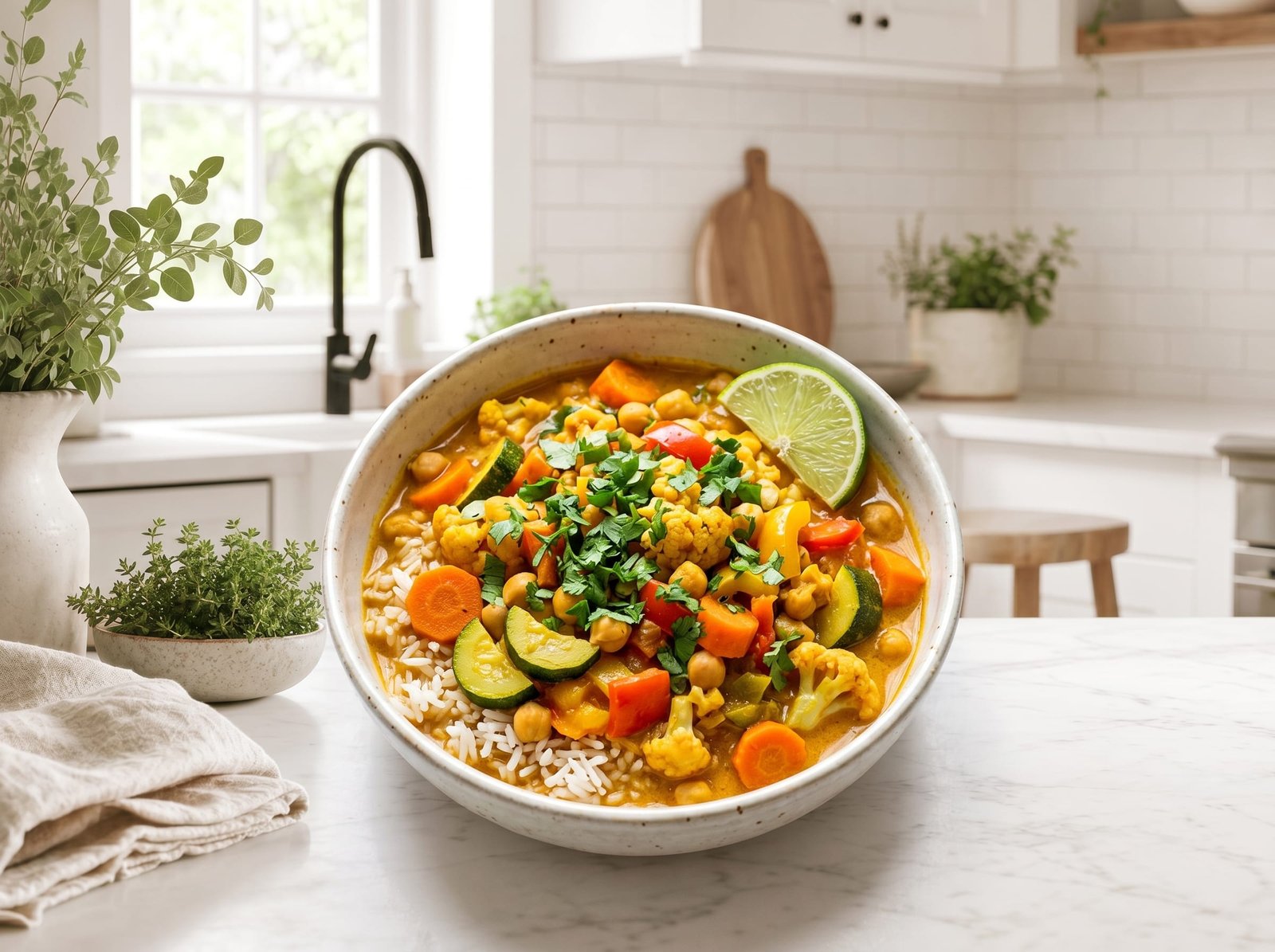
Easy Instant Pot vegetable curry with chickpeas and vegetables in a creamy coconut sauce, ready in 30 minutes. Layering the vegetables by toughness keeps them tender, not mushy.
Ingredients
- 2 tablespoons olive oil
- 1 yellow onion, diced
- 3 garlic cloves, minced
- 1 tablespoon fresh ginger, grated
- 1 tablespoon curry powder
- 1 teaspoon ground cumin
- 1 teaspoon turmeric
- 1 teaspoon salt
- 1/4 teaspoon cayenne pepper (optional)
- 2 medium carrots, chopped
- 1 cup cauliflower florets
- 1 can (15 oz) chickpeas, drained
- 1 red bell pepper, chopped
- 1 zucchini, chopped
- 1 can (14 oz) diced tomatoes
- 1 can (14 oz) full-fat coconut milk
- 1/2 cup vegetable broth
- Juice of 1 lime
- Fresh cilantro, for garnish
Instructions
- Set Instant Pot to Saute. Cook onion in olive oil 2 to 3 minutes, then add garlic and ginger and cook 1 minute more.
- Add curry powder, cumin, turmeric, salt, and cayenne and toast 30 seconds until fragrant.
- Stir in carrots, cauliflower, and chickpeas, then diced tomatoes, coconut milk, and broth. Scrape the bottom clean.
- Pressure cook on high for 5 minutes, then natural release 5 minutes and quick release the rest.
- Stir in bell pepper and zucchini, cover off-heat for 5 minutes until just tender.
- Stir in lime juice, adjust seasoning, and serve over rice topped with cilantro.
Nutrition: 280 calories