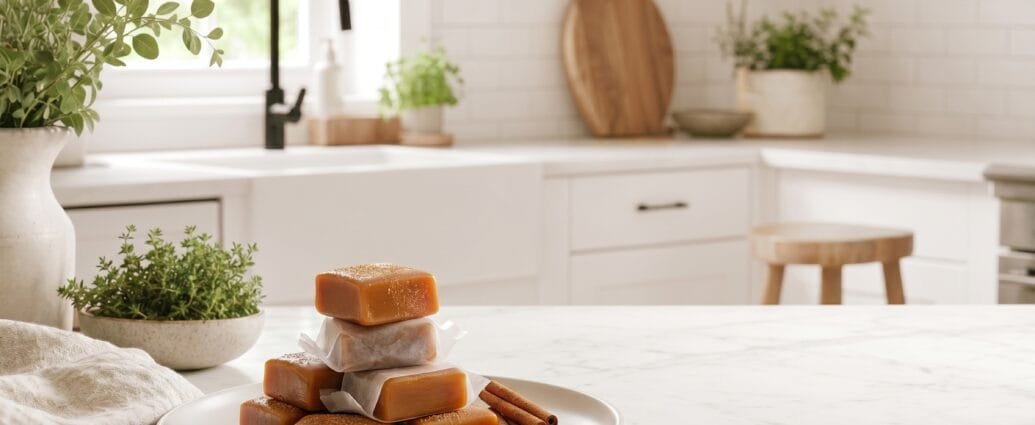
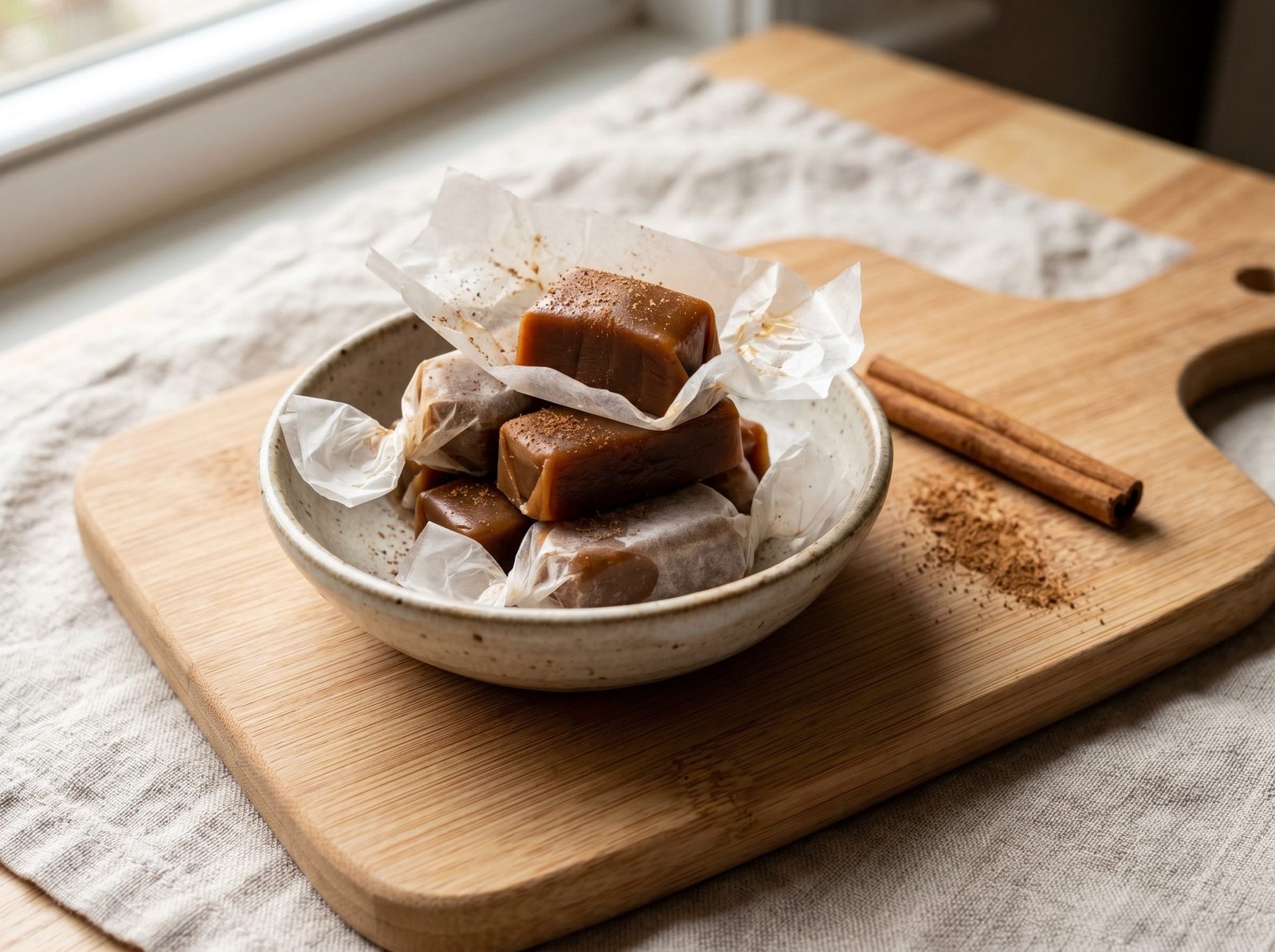
If you have ever poured a batch of homemade caramels only to end up with a rock-hard slab or a sticky puddle that never set, you are exactly who I wrote this recipe for. These gingerbread caramels are the soft, chewy, melt-on-your-tongue kind, and you do not need a candy thermometer to get them right. The secret is not a fancy gadget; it is knowing what the caramel should look and feel like at each stage, which I will walk you through below. Warm with cinnamon, ginger, and molasses, they taste like a gingerbread cookie that learned to melt.
I have made these every December since my personal-chef days, when a friend asked for a homemade gift that would survive being mailed across the country. Caramels were the answer, and the gingerbread spice made them feel like the holidays in a single square.
What Makes These Gingerbread Caramels Different
Most homemade caramels are pure butter, sugar, and cream. These keep all that richness but add dark brown sugar and molasses for a deep, gingerbread-cookie warmth, plus a blend of cinnamon, ginger, nutmeg, cloves, and allspice. The result is a caramel that is cozy and spiced rather than flat-sweet, and the molasses also helps the texture stay luxuriously chewy instead of brittle.
Why You’ll Love This Recipe
- Perfectly balanced warm gingerbread spices in every bite.
- Chewy, buttery texture that melts in your mouth, never tooth-cracking.
- No candy thermometer required, just simple visual cues.
- Made with everyday pantry ingredients.
- Wrap them in wax paper and you have an instant, heartfelt holiday gift.
The No-Thermometer Trick (the part most recipes skip)
Here is the differentiator: caramel is all about the cold-water test and visual reading, not a single magic number. As your mixture boils, the sugars are slowly losing water and concentrating. For soft, chewy caramels you want the firm-ball stage, roughly 245 to 248 degrees F if you do own a thermometer.
Without one, do this: after the mixture has boiled and thickened (about 5 to 7 minutes, deepened to the color of dark honey), drop a small spoonful into a glass of very cold water. Let it sit a few seconds, then fish it out and roll it between your fingers. If it forms a soft, pliable ball that holds its shape but still gives easily, you are there. If it dissolves or stays runny, keep cooking and test again every minute. If it forms a hard, unbendable ball, you have gone slightly too far, so pull it off the heat immediately. This one test is the difference between caramels that set perfectly and a batch that disappoints.
Ingredients (with notes)
- Granulated sugar (1 cup): the clean, sweet backbone. Plain white sugar gives the most reliable set.
- Dark brown sugar (1/2 cup): adds molasses-y depth; dark brown beats light here for gingerbread flavor.
- Unsalted butter (1/2 cup): use the real thing, not margarine, for that creamy chew.
- Heavy cream (1 cup): non-negotiable for texture; do not swap milk or half-and-half or the caramel will not set softly.
- Molasses (2 tablespoons): the soul of the gingerbread flavor. Use unsulphured, not blackstrap, which can turn bitter.
- Gingerbread spice mix (1 1/2 teaspoons): cinnamon, ginger, nutmeg, cloves, and allspice. No blend on hand? Mix 3/4 tsp cinnamon, 1/2 tsp ginger, and a pinch each of nutmeg, cloves, and allspice.
- Vanilla extract (1 teaspoon): rounds everything out; stir in off the heat so it does not cook away.
- Salt (a pinch): sharpens the spices and cuts the sweetness. Flaky salt on top is lovely too.
Step-by-Step Instructions
- Prep the pan first. Line an 8×8-inch pan with parchment, leaving an overhang on two sides, and lightly grease it. Caramel waits for no one, so have this ready before you start.
- Melt everything together. In a medium heavy-bottomed saucepan, combine granulated sugar, dark brown sugar, butter, heavy cream, molasses, and salt. Heat over medium, stirring constantly, until the butter melts and the sugars dissolve. A heavy pan matters here, because thin pans create hot spots that scorch caramel.
- Bring to a gentle boil. Once smooth, raise the heat slightly to a steady bubble. Stir often so nothing catches on the bottom.
- Cook to firm-ball stage. Boil 5 to 7 minutes until thickened and darkened to deep honey. Use the cold-water test above to confirm a soft, pliable ball.
- Add the aromatics off heat. Pull the pan from the burner, then stir in the gingerbread spices and vanilla. Adding them now keeps the spices bright and the vanilla from burning off.
- Pour and set. Pour into your prepared pan. Cool at room temperature about 30 minutes, then refrigerate at least 2 hours until firm.
- Cut and wrap. Lift the slab out by the parchment, cut into small squares with a sharp, lightly oiled knife, and wrap each piece in wax paper.
Common Mistakes to Avoid
- Walking away from the pot. Caramel goes from perfect to burnt in under a minute. Stay and stir.
- Using a thin saucepan. It scorches the bottom before the rest catches up, leaving a bitter, grainy edge.
- Substituting milk for cream. Lower fat means the caramels will not set to that soft chew.
- Stirring vanilla and spices in too early. The high heat dulls the spice and cooks off the vanilla.
- Cutting before fully chilled. Warm caramel oozes and will not hold clean squares; give it the full chill.
Make Ahead, Storage & Reheating
These are a dream make-ahead treat. Store wrapped caramels in an airtight container at room temperature for up to 2 weeks, or in the fridge for up to a month. To freeze, wrap each piece tightly and freeze up to 3 months; let them come back to room temperature before serving so they regain their chew. If your kitchen runs warm, keep them chilled, because caramels soften in heat. There is no reheating needed, just let cold caramels sit out a few minutes before eating.
Variations
- Salted gingerbread caramels: sprinkle flaky sea salt over the top right after pouring.
- Chocolate-dipped: dip cooled squares halfway in melted dark chocolate and add festive sprinkles.
- Extra-spicy: bump the spice blend to 2 teaspoons and add a pinch of black pepper for a real gingerbread kick.
- Nutty: press toasted chopped pecans into the surface before chilling.
What to Serve With Gingerbread Caramels
These caramels belong on any holiday dessert table. Pair them with a mug of something cozy or tuck them into a gift box alongside other homemade treats:
- Cozy Gingerbread Eggnog Latte for a matching spiced sip.
- Dark Chocolate Peppermint Bark Fudge, another no-fuss candy for the gift box.
- Gingerbread Cookie Cheesecake Bars if you want to lean all the way into gingerbread.
- Maple Walnut Fudge for a fellow stovetop sweet.
- 15 Christmas Dessert Recipes to round out your whole holiday spread.
Kitchen Gear for This Recipe
As an Amazon Associate, The Kitchen’s Aid earns from qualifying purchases at no extra cost to you.
FAQs
Do I really not need a candy thermometer?
Correct. The cold-water firm-ball test does the same job: a soft, pliable ball means soft, chewy caramels. A thermometer (245 to 248 degrees F) is a nice backup, but it is genuinely optional here.
Why are my caramels too hard or too soft?
Texture is all about how long you boil. Too hard means you cooked past firm-ball stage, so pull off the heat sooner next time. Too soft or runny means you stopped too early, so cook a minute or two longer and re-test in cold water.
Can I double the recipe?
Yes, but use a wide, heavy pot and expect a slightly longer boil. Pour into a 9×13-inch pan. Avoid crowding the caramel into too small a pan, which makes it set too thick to cut neatly.
How do I keep the caramels from sticking to the wrappers?
Wax paper or pre-cut caramel wrappers release best; parchment squares also work. Make sure the caramels are fully chilled before wrapping, and store them somewhere cool.
What is the best molasses to use?
Unsulphured (regular) molasses. Blackstrap is much more bitter and can overwhelm the warm spices.
Recipe Summary
Soft, chewy gingerbread caramels made on the stovetop with no candy thermometer. Boil sugar, brown sugar, butter, cream, and molasses to firm-ball stage (use the cold-water test), stir in gingerbread spices and vanilla off the heat, then pour, chill, cut, and wrap. Prep 10 minutes, cook 15 minutes, chill 2 hours, yields about 50 small caramels.
If you make these gingerbread caramels, I would love to see them! Tag me on Instagram with #TheKitchensAid or leave a comment below. Let’s make this holiday season extra sweet together.
Gingerbread Caramels
American · Candy
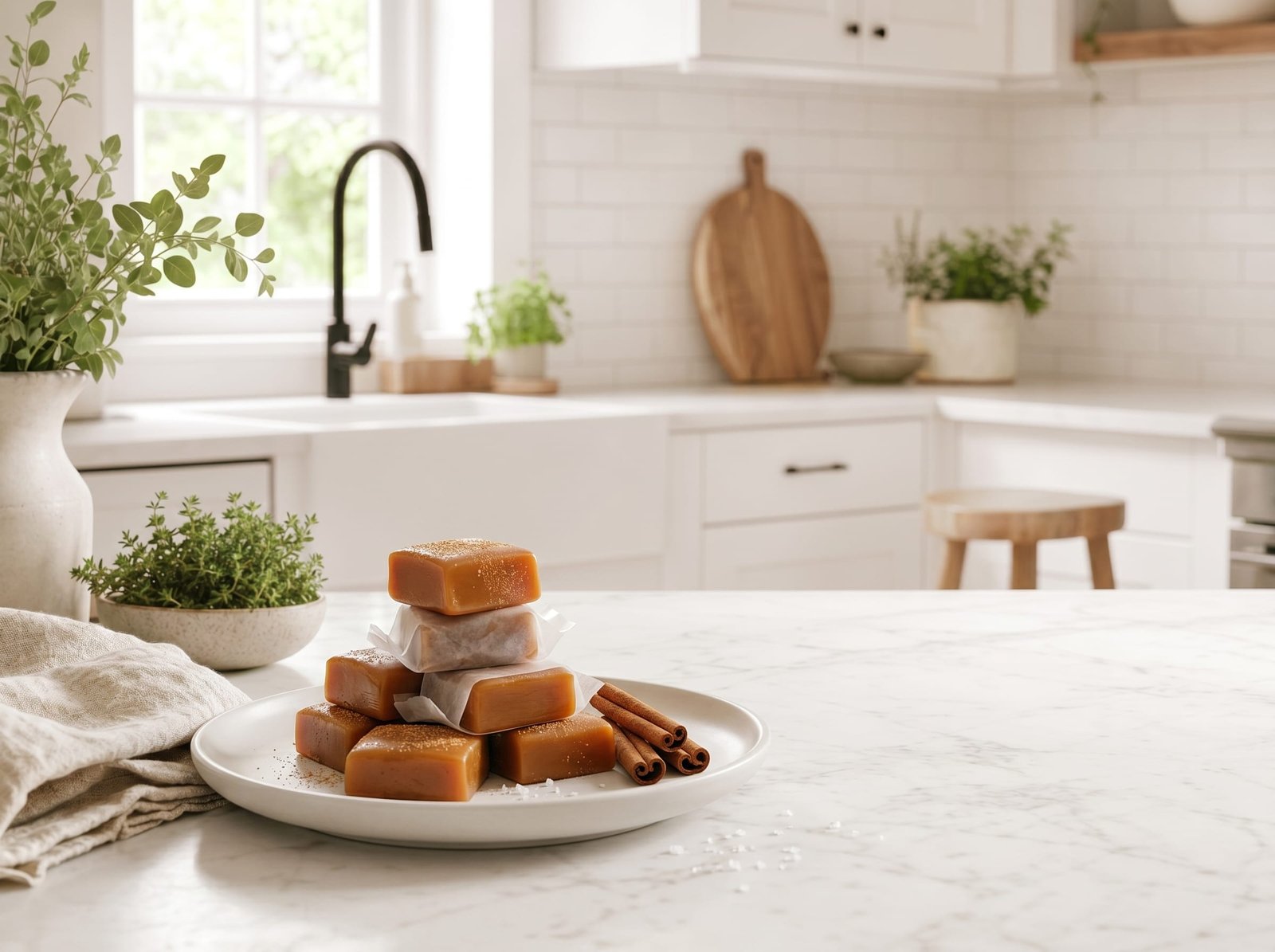
Soft, chewy homemade gingerbread caramels made on the stovetop with no candy thermometer, spiced with cinnamon, ginger, and molasses for the holidays.
Ingredients
- 1 cup granulated sugar
- 1/2 cup dark brown sugar
- 1/2 cup unsalted butter
- 1 cup heavy cream
- 2 tablespoons unsulphured molasses
- 1 1/2 teaspoons gingerbread spice mix
- 1 teaspoon vanilla extract
- Pinch of salt
Instructions
- Line an 8×8-inch pan with parchment, leaving an overhang, and lightly grease it.
- In a heavy saucepan, combine granulated sugar, dark brown sugar, butter, heavy cream, molasses, and salt. Heat over medium, stirring constantly, until smooth.
- Raise the heat to a gentle boil and stir often to prevent scorching.
- Boil 5 to 7 minutes until thickened and deep honey in color. Confirm with the cold-water test: a spoonful dropped in cold water should form a soft, pliable ball (about 245-248 degrees F).
- Remove from heat and stir in the gingerbread spices and vanilla.
- Pour into the prepared pan. Cool at room temperature 30 minutes, then refrigerate at least 2 hours until firm.
- Lift out by the parchment, cut into small squares with a sharp oiled knife, and wrap each piece in wax paper.
Made this? Rate it