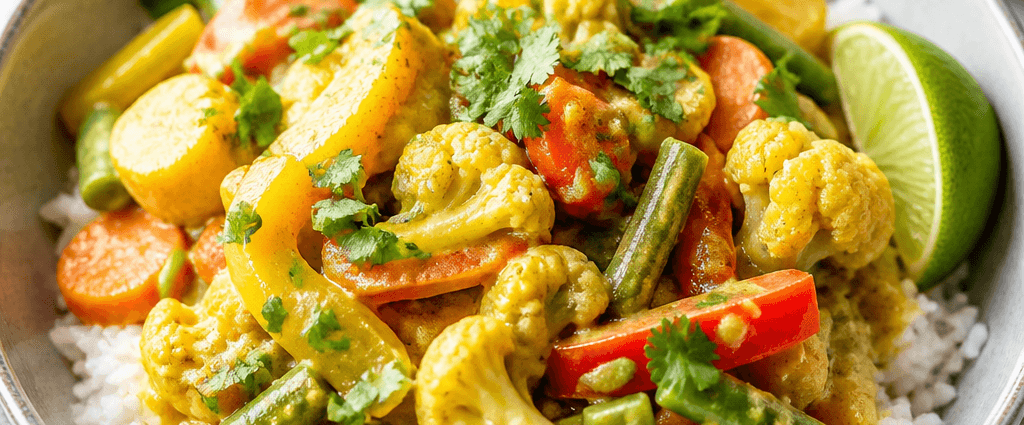
The dirty little secret of most one-pot instant pot vegetable curry recipes is that everything goes into the pot at once, cooks for exactly the same amount of time, and the delicate vegetables come out sad and mushy. Zucchini turns to slush, bell peppers go limp, and the bright, fresh dinner you pictured is suddenly baby food with curry powder stirred through it. After making this curry on more chaotic weeknights than I can count, I finally landed on the fix, and it costs you no extra time at all.
The trick is simply to stop treating every vegetable the same. The sturdy ones go in for the pressure cook, and the tender ones get stirred in afterward, where the residual heat finishes them in about five minutes. What you get is a curry where every single vegetable still has shape and bite, swimming in a creamy, golden coconut sauce that tastes like it simmered all afternoon. This one was born on a night with half a fridge of vegetables, a can of coconut milk and no plan whatsoever, and it has been a weekly regular ever since.
Why You’ll Love This Recipe
It is fast in the way weeknight dinners actually need to be fast. From the moment you press saute to the moment you are spooning curry over rice is under thirty minutes, and most of that is hands-off while the pot does its thing. There is one pot to wash at the end, which counts for a great deal on a Tuesday.
It is also nourishing without feeling like a compromise. The dish is naturally vegan, gluten-free and dairy-free, loaded with fiber from the chickpeas and vegetables, and satisfying enough that nobody asks what happened to the meat. The coconut milk gives it a richness that makes it feel indulgent while the vegetables keep it light.
And it bends to whatever you have. The vegetable lineup is a suggestion rather than a rule, so this becomes a genuinely useful recipe for clearing out the crisper drawer. Better still, the leftovers taste even better the next day as the spices settle, and the whole thing freezes beautifully, which makes it a quiet workhorse for meal prep.
Ingredients
The flavor base starts with 2 tablespoons of olive oil, 1 diced yellow onion, 3 minced garlic cloves and 1 tablespoon of grated fresh ginger. Building this properly in the bottom of the pot before anything else goes in is what separates a curry that tastes homemade from one that tastes like a jar. The spices are 1 tablespoon of curry powder, 1 teaspoon of ground cumin, 1 teaspoon of turmeric, 1 teaspoon of salt and an optional quarter teaspoon of cayenne for heat, and toasting them briefly in the hot oil is the difference between flat and fragrant.
The sturdy crew that can take a full pressure cycle is 2 chopped carrots, 1 cup of cauliflower florets and a 15-ounce can of chickpeas, drained. Held back for the end are 1 chopped red bell pepper and 1 chopped zucchini, the tender vegetables that would dissolve under pressure but finish perfectly in residual heat. Any leafy greens you want to use belong in that second group too.
For the sauce you need a 14-ounce can of diced tomatoes for acidity and body, a 14-ounce can of full-fat coconut milk for the creamy heart of the dish, and half a cup of vegetable broth to keep everything saucy and prevent a burn warning. Full-fat coconut milk is genuinely worth it here; light coconut milk works but the sauce will be noticeably thinner. Finish with the juice of 1 lime and a generous handful of fresh cilantro, which lift the whole bowl and keep the richness in check.
Step-by-Step Instructions
Set the Instant Pot to saute and add the olive oil. Cook the diced onion for 2 to 3 minutes, until it has softened and turned translucent, then stir in the garlic and ginger and cook for 1 minute more. You are looking for fragrant, not browned, so keep things moving.
Add the curry powder, cumin, turmeric, salt and cayenne and toast them for about 30 seconds, stirring constantly. This tiny step is the one people skip and the one that matters most; raw spice powder stirred into liquid tastes dusty and flat, while spices bloomed in hot oil release their essential oils and perfume the entire pot.
Stir in the carrots, cauliflower and drained chickpeas, then add the diced tomatoes with their juices, the coconut milk and the vegetable broth. Scrape the bottom of the pot clean as you go so nothing is stuck to the base, and let the tomatoes and coconut milk settle on top rather than stirring them all the way down. A clean bottom and enough liquid are what keep the dreaded burn message from appearing.
Lock on the lid, set the valve to sealing, and cook on high pressure for 5 minutes. When the timer finishes, let the pressure release naturally for 5 minutes, then move the valve to release the rest. That short natural release lets the carrots and cauliflower finish gently instead of being shocked by an instant drop in pressure.
Now stir in the chopped bell pepper and zucchini, along with any greens you are using, and put the lid back on with the pot switched off. Five minutes of residual heat is all it takes to bring them to just-tender while keeping their color and bite completely intact. This is the whole secret, and it happens while you are getting bowls out of the cupboard.
Finish by stirring in the lime juice, then taste and adjust the salt and the heat. Spoon the curry over rice or quinoa, shower it with fresh cilantro, and serve it warm. If the sauce is thicker than you like, loosen it with a splash more broth; if it is thinner than you like, let it sit on saute for a couple of minutes to reduce.
Tips for the Best Instant Pot Vegetable Curry
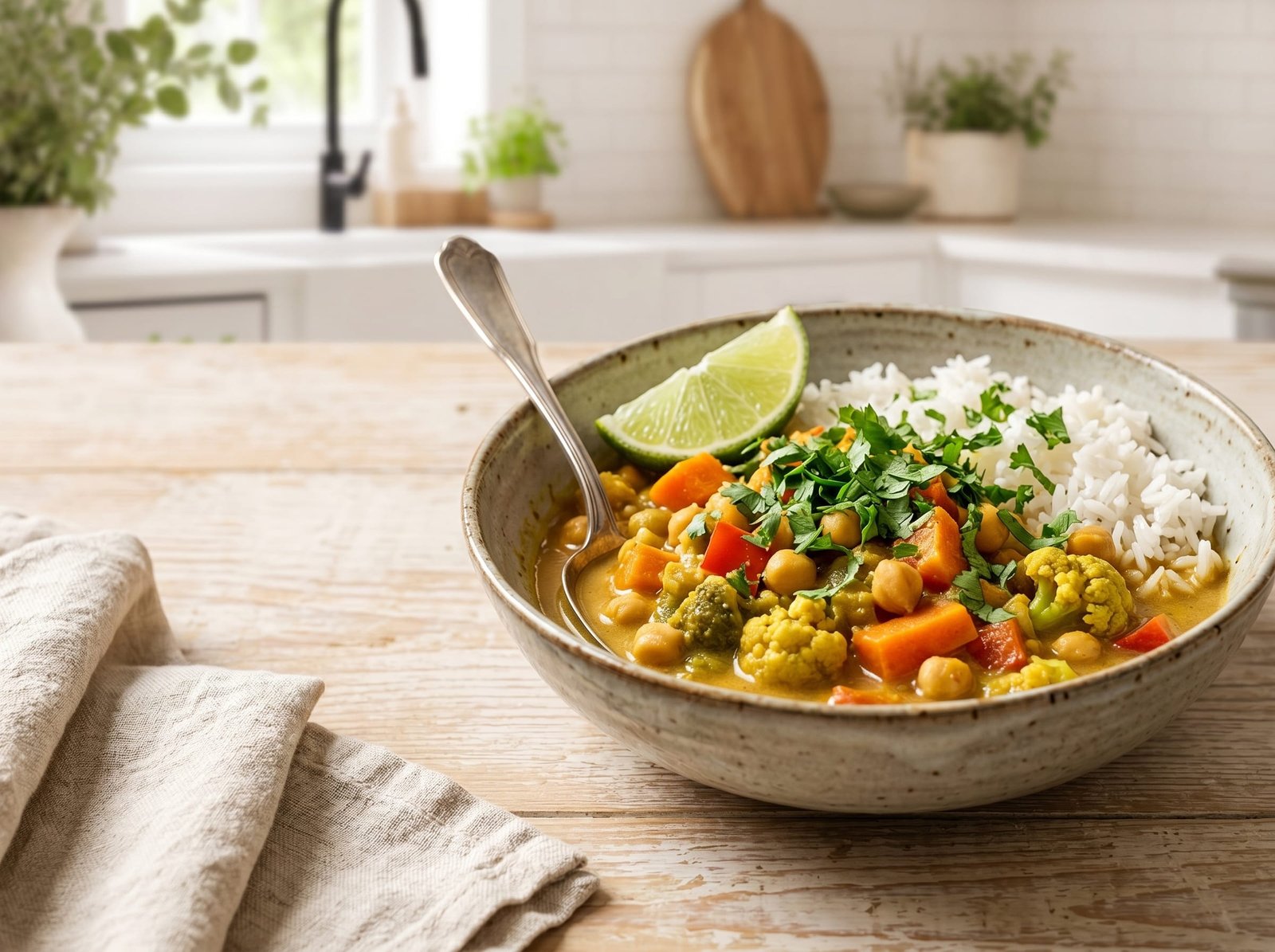
Respect the layering and everything else falls into place. Carrots, cauliflower, potatoes and squash can take the full pressure cycle; zucchini, bell peppers, peas and greens cannot, and no amount of careful timing on the pressure cook will save them. Sorting your vegetables into sturdy and tender before you start takes thirty seconds and is the single most useful habit you can build for pressure-cooker vegetables generally.
Do not skip the acid at the end. The lime juice is not a garnish, it is a corrective, and it brightens the coconut milk and wakes up the spices in a way that salt alone cannot. Along the same lines, a pinch of garam masala stirred in off the heat adds a lovely warm depth if you have it, and a spoonful of cashew butter makes the sauce even silkier.
Round out the meal with the things that make a curry feel like an occasion. Fluffy Instant Pot rice soaks up every drop of that coconut sauce, and warm grilled naan with garlic and herbs is what you will want for mopping the bowl clean at the end. A dollop of yogurt or raita on top makes a cooling contrast if you have leaned into the cayenne.
Kitchen Gear for This Recipe
- Instant Pot Duo 6-Quart
- Tempered Glass Instant Pot Lid
- Steamer Basket & Trivet Set
- Instant-Read Meat Thermometer
As an Amazon Associate, The Kitchen’s Aid earns from qualifying purchases at no extra cost to you.
Frequently Asked Questions
Why do my vegetables turn to mush in the Instant Pot?
Because tender vegetables like zucchini, bell peppers and greens cannot survive a full pressure cycle. Pressure cook only the sturdy vegetables, then stir the delicate ones in afterward and let the residual heat cook them through with the lid resting on top.
How do I avoid the burn message on my curry?
Deglaze the pot after sauteing so nothing is stuck to the bottom, make sure there is enough liquid between the broth and the coconut milk, and add the diced tomatoes and coconut milk on top without scraping them down into the base.
Can I make this vegetable curry without an Instant Pot?
Yes. Saute the aromatics and bloom the spices in a large pot or Dutch oven, add the sturdy vegetables and the liquids, and simmer covered for about 20 minutes. Stir in the tender vegetables for the last 5 minutes, until just tender.
How long does it keep?
It keeps in an airtight container in the fridge for up to 4 days and the flavor genuinely improves overnight. It also freezes for up to 2 months; coconut sauces can look separated after freezing, but a good stir as it reheats brings everything back together.
How can I add more protein?
Stir in cooked lentils, cubed tofu or shredded chicken after pressure cooking, or simply double the chickpeas, which is the easiest plant-based boost of all. Serving the curry over quinoa instead of rice adds a little more as well.
Creamy, golden and ready in about 25 minutes, this is the curry I lean on hardest when the afternoon has gotten away from me and dinner still has to happen. For more wholesome inspiration, browse these healthy snack ideas, and if you make it with your own spin I would love to see it, so tag @thekitchensaid on Instagram. Happy cooking!
Instant Pot Vegetable Curry
Indian · Main Course
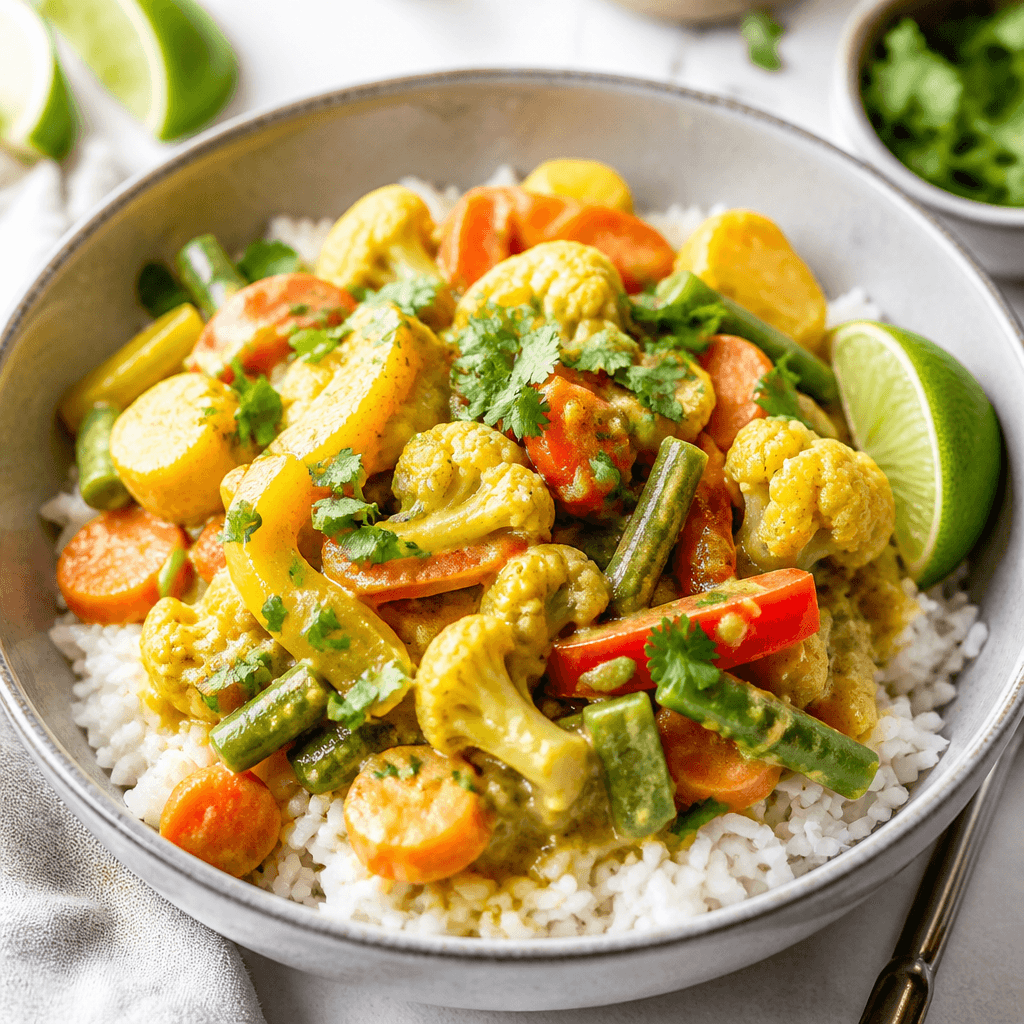
Easy Instant Pot vegetable curry with chickpeas and vegetables in a creamy coconut sauce, ready in about 25 minutes. Layering the vegetables by toughness keeps them tender, not mushy.
Ingredients
- 2 tablespoons olive oil
- 1 yellow onion, diced
- 3 garlic cloves, minced
- 1 tablespoon fresh ginger, grated
- 1 tablespoon curry powder
- 1 teaspoon ground cumin
- 1 teaspoon turmeric
- 1 teaspoon salt
- 1/4 teaspoon cayenne pepper (optional)
- 2 medium carrots, chopped
- 1 cup cauliflower florets
- 1 can (15 oz) chickpeas, drained
- 1 red bell pepper, chopped
- 1 zucchini, chopped
- 1 can (14 oz) diced tomatoes
- 1 can (14 oz) full-fat coconut milk
- 1/2 cup vegetable broth
- Juice of 1 lime
- Fresh cilantro, for garnish
Instructions
- Set the Instant Pot to saute. Cook the diced onion in the olive oil for 2 to 3 minutes, then add the garlic and ginger and cook 1 minute more.
- Add the curry powder, cumin, turmeric, salt and cayenne and toast about 30 seconds until fragrant.
- Stir in the carrots, cauliflower and chickpeas, then add the diced tomatoes, coconut milk and broth. Scrape the bottom of the pot clean.
- Lock the lid, set the valve to sealing, and cook on high pressure for 5 minutes.
- Release naturally for 5 minutes, then quick release the remaining pressure.
- Stir in the bell pepper and zucchini, replace the lid off the heat, and let stand 5 minutes until just tender.
- Stir in the lime juice, adjust seasoning, and serve over rice topped with fresh cilantro.
Nutrition: 280 calories
Made this? Rate it